
Sell It or Lend It? With Our Emergency Oil, the Devil Is in the Details
Refiners took most of the oil when the government sold it. Trading firms took the largest share when the government lent it. The rules of each deal help explain why.

Eric Pachman
Published
October 13th 2026
In my last research post, I showed you how the government is lending out our emergency oil in 2026, and promised to compare it with the last big release, in 2022. I thought that would be straightforward. Boy was I wrong.
You see, this comparison meant studying details that look harmless. But when it comes to the Strategic Petroleum Reserve, or SPR, the devil is lurking throughout the details.
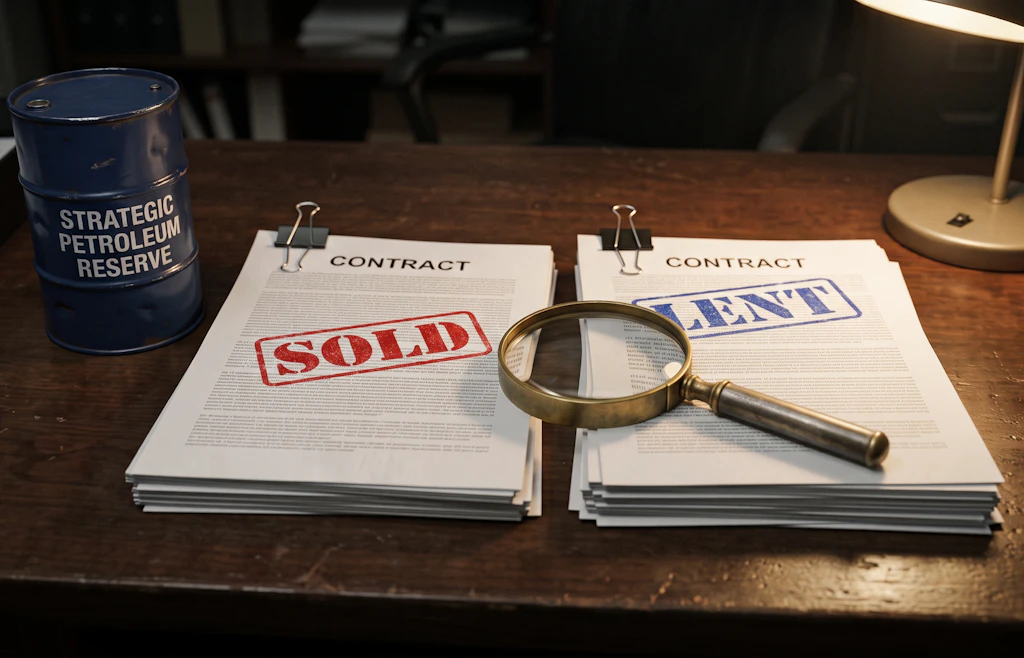
The detail that mattered most was this - does the government sell its emergency oil, or lend it? In 2022 it sold. In 2026 it is lending. That small-sounding choice helps explain who ended up with the barrels, and it changes what the country was left holding afterward.
Same reserve, different winners
In 2022, as a response to Russia's invasion of Ukraine and the resulting oil market chaos, the Energy Department held seven emergency sales and sold 180.66 million barrels to 16 companies. In 2026 it has lent 133.56 million barrels to 13 companies so far. The chart below shows what kinds of companies got the oil each time.
In 2022, refiners took 77.4% of the oil. Refiners are the companies that turn crude oil into gasoline and diesel. Trading houses, which buy and sell oil but do not refine it, took just 5.5%.
If you read our last post, you already know the picture in 2026 is very different. Trading houses have taken 45.0%, and refiners 38.3%.
The largest buyer in 2022 was Valero, a refiner, with 25.7% of the oil. The largest borrower in 2026 is Trafigura, a trading house, also with 25.7%.
One caution: the company types are our labels. They tell you who signed the deal, not where any barrel ended up.
Structuring the release as a sale vs. a loan had big implications
So why did different companies win? Here is the part I think matters most. The chart below puts the two deals side by side.
In a 2022 sale, the winner paid the market price around the day it picked up the oil, plus or minus the small gap it had bid. The sale notice says, in part: "The unit price for crude oil under the contract shall be the Delivery Reference Price (DRP) adjusted by the Price Adjustment Factor."
In plain words, a buyer could not lock in today's price and wait. Whatever oil cost at pickup, that is what it paid. All a bidder could compete on was a few dollars above or below the market. The bids show it: 96.7% of the oil was won at a bid within $5 of the government's reference price.
So what made a barrel worth more to one company than another? My take - being able to use it. A refinery with a pipeline to the reserve could put that oil to work right away.
The 2022 bids fit that. Any qualified company could bid, and the highest prices won. Five trading houses did bid, but their prices averaged $5.12 a barrel below the lowest winning price for the same oil. Refiners' prices averaged 26 cents below.
A 2026 loan works differently. The borrower owes no dollars. It owes the same amount of oil later, plus extra barrels. Remember the days when you could get a zero down mortgage? It's like that. The borrower pays the government nothing up front. It only needs a bank to guarantee the value of the oil. And it makes no interest payments until the loan comes due (or even later... we'll come back to that).
As we saw in the last post, when oil for later delivery costs much less than oil today, a borrower can sell the oil now and arrange to buy back what it owes for less. Any company with a trading desk can try that. It does not need a refinery.
In my view, that is the key difference:
Structuring the release as a sale rewards the company that needs the oil now. Structuring it as a loan rewards the company that can trade the gap between today's price and a later price.
What the government could not control
There is a second explanation, and the data cannot rule it out.
In 2026, oil has sold for much more overseas than it has in the United States. That pulls barrels toward ships, and shipping oil around the world is what trading houses do. From March through July, crude oil exports from the Gulf Coast ran about 40% above the same months of 2022.
So both things are likely at work: the design of the deal, and the pull of higher prices abroad. I cannot tell you how much of the change belongs to each.
The risk of lending oil: getting it back on time
We now have the government's own records on this, from the last time it lent oil.
In late 2021 and early 2022, before the big sales, the Energy Department made 13 smaller oil loans totaling 24.42 million barrels. The department has posted the contracts, along with 30 later changes to them. We pulled them all. Here is what they show.
- Return dates moved back on 10 of the 13 loans. The department signed each change.
- On seven loans, all or part of the oil was pushed back by two years or more.
- Trafigura borrowed 3 million barrels in January 2022, due back between June and September 2024. A change signed on April 16, 2024 moved that to July through October 2026.
- Several of the later dates came at no extra cost. Several of the changes say so directly: "There is no adjustment to the premium as a result of this extension." Others do not mention it. Go back to our mortgage example. Imagine the bank agreed to let you pay two years late and wrote that no extra interest was due.
To be fair, the companies did not miss deadlines. The government agreed to every change, and the records tie three of them to a pause at the government's own storage site. The records also do not show whether the oil came back on the new dates.
But look at what this means for the reserve. Oil lent in 2022 and promised for 2024 was rescheduled for 2026, in the middle of the next emergency.
And the government knew about these delays going into 2026. It still chose to lend again. Five of the six companies whose return dates were pushed back on those earlier loans are borrowing again this year.
What happened to the sale proceeds in 2022?
The 2022 sales had their own problem. Yes, we got money for the oil, and more of the oil went to refiners. But follow the money. The chart below shows where it went.
The Energy Department reports that the reserve's account received $16.99 billion from the 2022 emergency sales.
One would think if just under $17 billion went into some bank account to buy back oil, we would spend that $17 billion on buying back oil.
Not so fast.
What really happened was Congress took most of this money back. In the spending law passed in December 2022, it cancelled $12.45 billion of the money in the reserve's account. That was 73.2% of what the sales brought in. The department could no longer spend that money on oil, and the law does not say what it was used for instead.
If that wasn't confusing enough, it gets better. The department said that just over $10 billion of this was a trade: in the same law, Congress cancelled 140 million barrels of oil sales it had ordered for later years, and in return, took $10 billion and change back.
If this doesn't make any sense, welcome to the club.
Anyway, this entire convoluted back-and-forth left about $4.55 billion, nearly all of which was used to buy oil. From 2023 through 2024 the department bought back about 59 million barrels, at an average of about $76 a barrel.
Put those numbers side by side. We sold 180.66 million barrels. We bought back about a third of that. That gap is part of why our emergency reserve holds just 283 million barrels today. And we still do not know what became of the more than $12 billion Congress took back.
Unearthing the devilish details
We covered a lot of ground today. We started with a choice that sounds small, sell or lend, and saw very different companies end up with the oil. And somehow we ended with Congress taking back 73% of the 2022 sale money.
What ties these two findings together? They are details buried in government files, and they help explain why our emergency oil reserve is where it is today.
Besides now having a headache, I walk away from today's post with a greater appreciation for how important it is to pay attention to the minute details when it comes to how our government is being run.
The great news is that we now have the technology to help anyone dig into these details.
The bad news is we may not like what we find.
What this does not tell you
- Where the oil went. Crude oil is interchangeable once it enters the market. The records show who signed each deal, not where any barrel was refined or shipped.
- Why any company did or did not bid. We can see every 2022 offer. We cannot see the 2026 offers at all.
- How much of the change is due to the design of the deal. Prices abroad, the cause of the shortage and what refineries needed all differ between 2022 and 2026.
- How each company should be labeled. The company types are ours. Counted differently, the shares change, though trading houses' share is far higher in 2026 under every version we tried.
- Whether the lent oil came back on the new dates. The contract changes show what was scheduled. Most have no final settlement on file, and many of the amounts are blacked out.
- Exactly how much oil was delivered or paid for. Our sale and purchase figures are awards. The $16.99 billion received is the department's own count.
Common questions
Who bought the oil sold from the Strategic Petroleum Reserve in 2022?
Sixteen companies bought 180.66 million barrels in seven emergency sales. Refiners took 77.4% of the oil, and trading houses took 5.5%. The largest buyer was Valero, with 25.7%.
What happened to the money from the 2022 SPR sales?
The Energy Department reports that the reserve's account received $16.99 billion. In the spending law passed in December 2022, Congress cancelled $12.45 billion of it, or 73.2%. The department says just over $10 billion of that was in exchange for cancelling 140 million barrels of oil sales Congress had ordered for later years. About $4.55 billion was left, and nearly all of it was used to buy oil.
Was the SPR refilled after the 2022 sales?
Partly. From 2023 through 2024 the department bought back about 59 million barrels, at an average of about $76 a barrel. That is about a third of the 180.66 million barrels sold.
What is the difference between an SPR sale and an SPR exchange?
In a sale, a company pays cash for the oil and the oil does not come back. In an exchange, which is a loan, the company pays no cash. It returns the same amount of oil later, plus extra barrels. The 2022 release was a sale. The 2026 release is an exchange.
Have SPR oil loans been returned on time?
The government made 13 smaller oil loans in late 2021 and early 2022. Return dates moved back on 10 of them, and on seven, all or part of the oil was pushed back by two years or more. The government agreed to every change. The records do not show whether the oil came back on the new dates.
Why did trading companies get more SPR oil in 2026 than in 2022?
There are two likely reasons, and the data cannot separate them. A sale rewards a company that needs the oil now, and a loan rewards a company that can trade the gap between today's price and a later price. Also, oil has sold for much more overseas in 2026, which pulls barrels toward export.
The data, code and method notes are public at github.com/Data4ThePeople/spr-exchange.
Support Data That Serves the Public
Data should empower people, not just institutions. Your support helps us create accessible research, visualizations, and tools that uncover economic inequality and inform better decisions.
Donate
Enjoying this post?
Tell others about it.
More articles like this
Fetching Related Posts
There are no other articles tagged with Research