
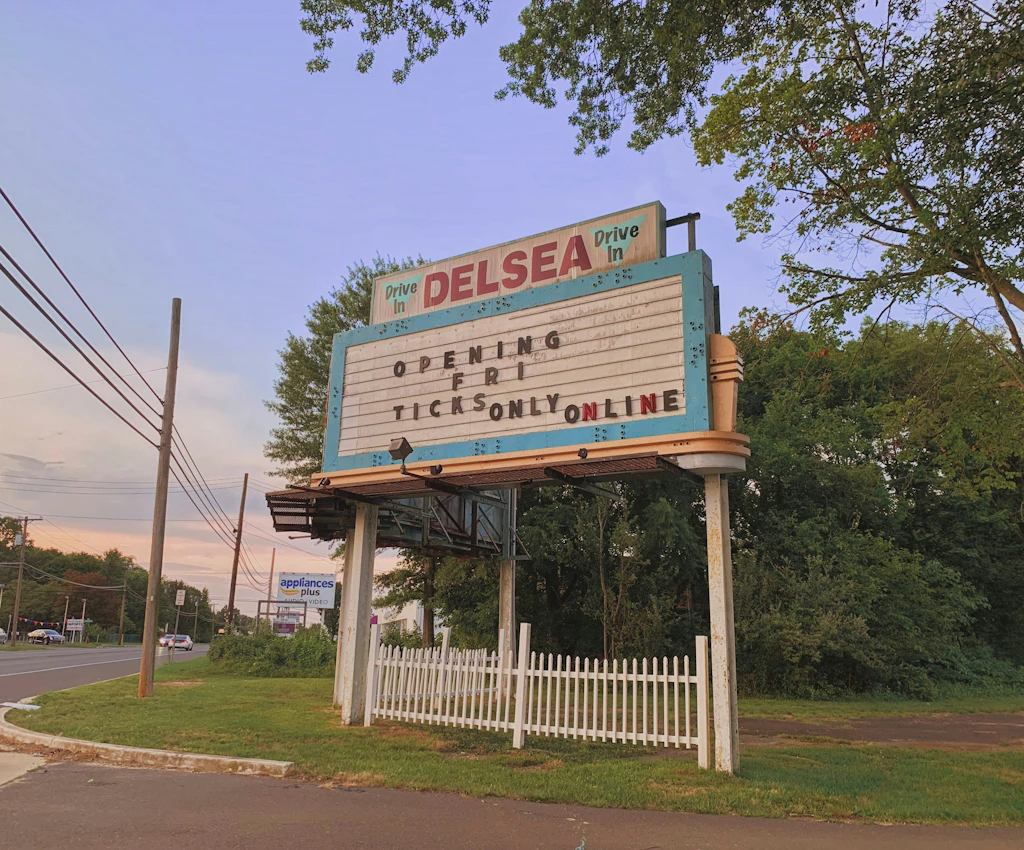
Accountability is Patriotism: 13 hours of minimum wage work for one date night?
In 1966, it took six. Here's the math behind the affordability gut punch.

Eric Pachman
Published
July 2nd 2026
Accountability is Patriotism
The Cost of Date Night - 1966 v. 2026
This is part of Accountability Is Patriotism, a series marking America's 250th year by asking a simple question: when life gets harder for most Americans, who in power is answerable for it, and what are they doing about it?
Last weekend, an elderly man struck up a conversation with me while I was shopping at my local Walmart. What followed was a story about growing up in the town where I now live, about how affordable everything used to be, and an expression of his palpable frustration that this is no longer true.
Outside a small slice at the very top, most of the country is feeling this to some degree — rising costs eating away at the American dream one grocery bill and utility bill at a time. Politicians campaign on affordability, and the words sound good, but not much changes.
I'm not above any of this. I budget too. But I realize I am fortunate to be in far better financial shape than most of America, and no amount of data analysis will ever let me fully understand what it's like to struggle the way someone working a minimum wage job to support a family does.
So today, I'm telling someone else's story, as best I can remember it:
Back in the late 60s we had it good. Gas was 17 cents a gallon. On Friday nights I'd fill up my tank for a few bucks, pick up a six-pack on the way to get my girlfriend, and we'd hit the drive-in for about a dollar, since they charged by the carload. After the movie we'd grab a burger, fries, and a pop, maybe another dollar or two. I could pay for that whole date night with six or seven dollars.
And now, look at this cat food I'm buying. They keep sneaking the price up a dime at a time. Maybe they think I don't notice. I notice.
I was floored, not just by how vividly his story took me back sixty years, but because I couldn't believe an entire date night once cost six or seven dollars. So I did what I do: I checked the numbers.
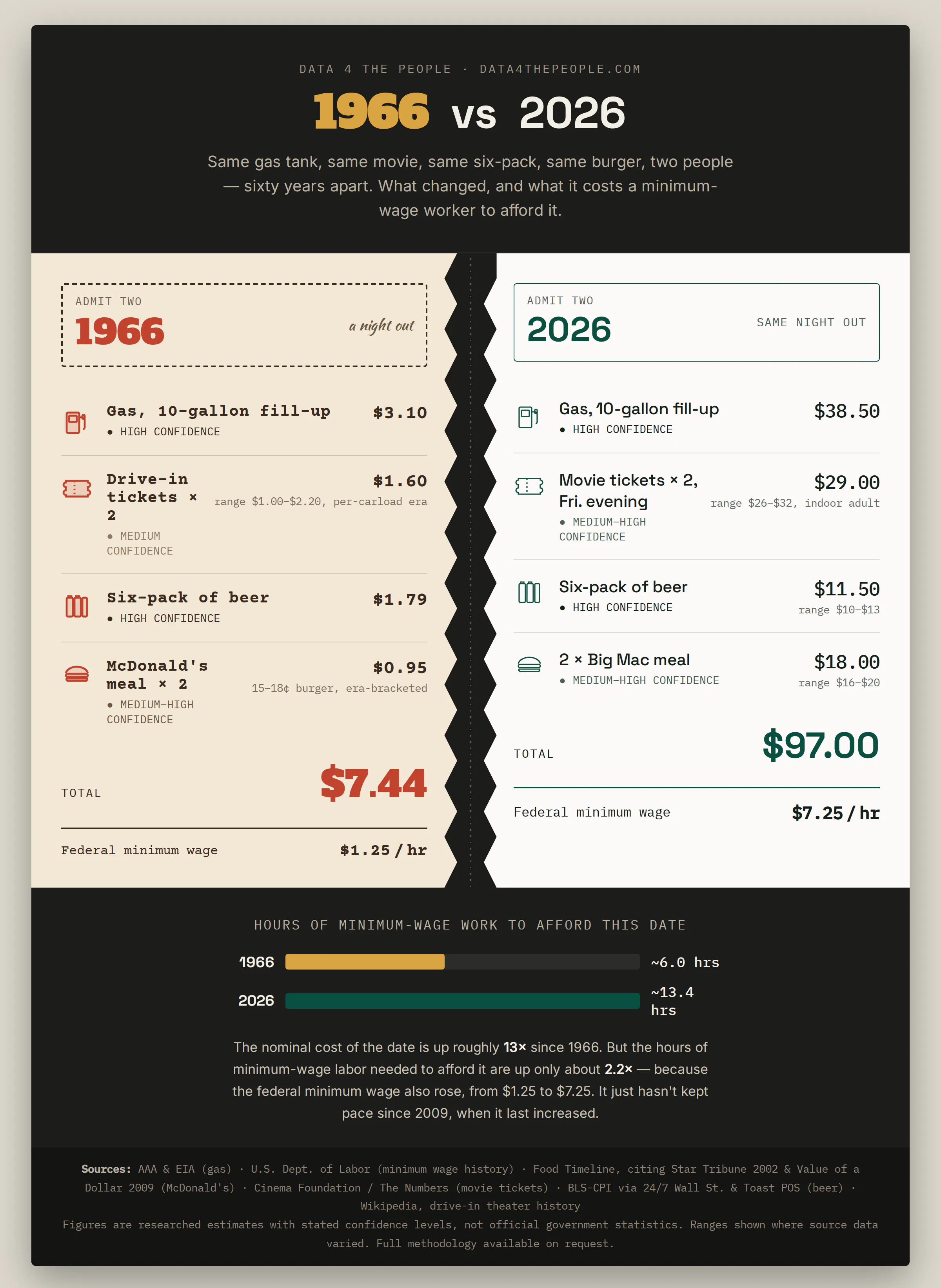
Turns out, he wasn't right on every single number. Memory sixty years out is going to miss a detail here and there. But when I added up the whole night, the total he'd carried in his head for six decades was remarkably close to what the data actually shows: he said six or seven dollars, and the real number comes out to $7.44.
I went a step further and priced out what that same night would cost today. $97.
Then came the step that allowed me to feel his frustration. I divided the total cost of the night by the federal minimum wage in each year. In 1966, it took about six hours of minimum-wage work to pay for that date. Today, it takes over thirteen.
That's the affordability gut punch. It's where America's anger lives: not in abstractions, but in small, real examples of how much harder life has gotten. We can't all work six-figure jobs. But we should all be able to afford one night a week to see a movie, eat a cheap meal, and grab a beer, without handing over 33% of a minimum-wage paycheck to do it.
So who's accountable to the millions of Americans who live this reality? That's the question worth sitting with, long after this newsletter hits your inbox.
Support Data That Serves the Public
Data should empower people, not just institutions. Your support helps us create accessible research, visualizations, and tools that uncover economic inequality and inform better decisions.
Donate
Enjoying this post?
Tell others about it.
More articles like this
Fetching Related Posts
There are no other articles tagged with Data 4 Thought