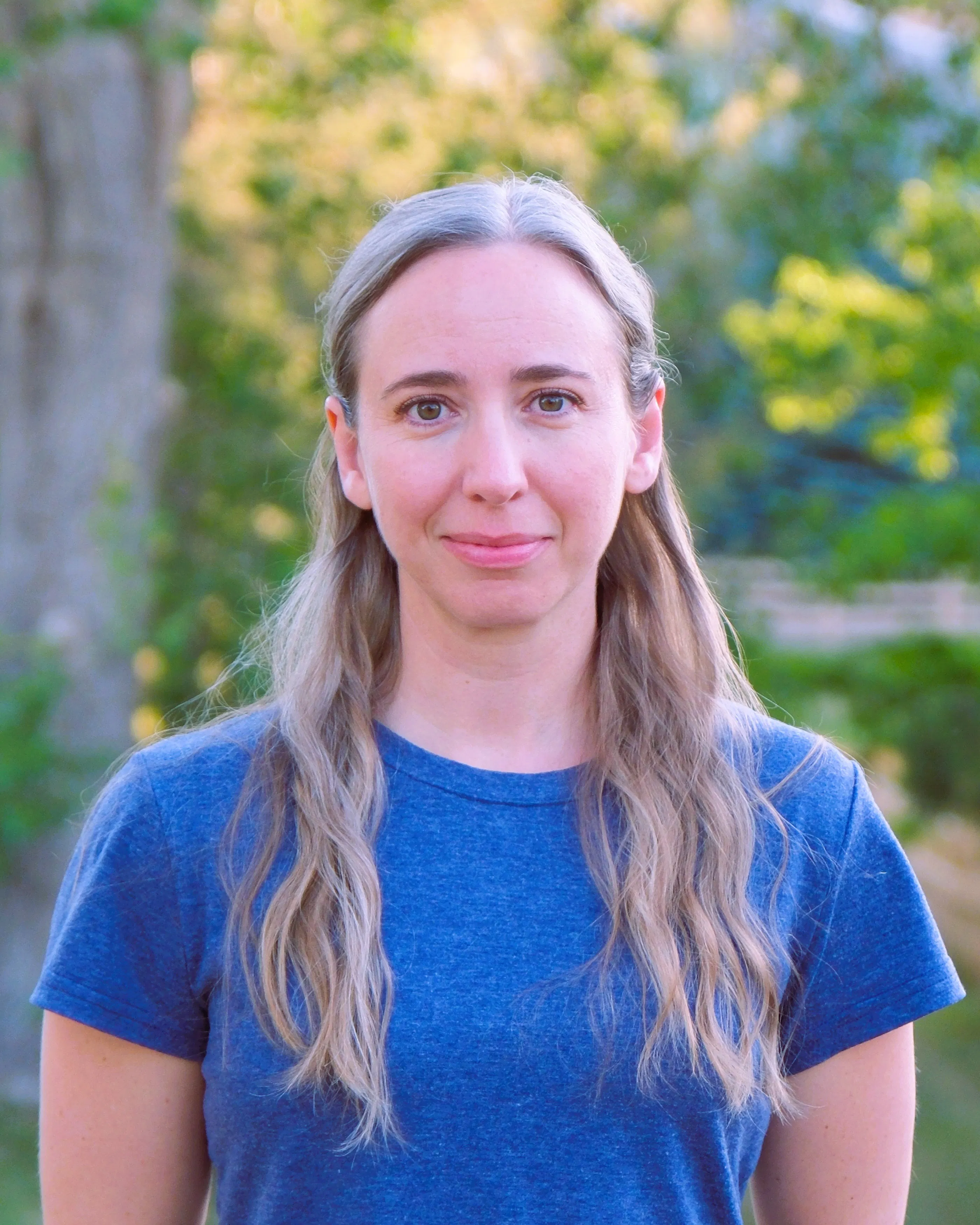
Amanda Sinton
Founding Data Architect
Bio
Amanda has always said, “I should have been an engineer”. Though she still isn’t technically an engineer, her meandering path was quietly pointing her towards a career in data. She began teaching English in Bangsaphan, Thailand — a village with exactly one stoplight and exactly one air-conditioned restaurant — followed by elementary robotics and coding in Seoul, then two years in south Denver classrooms, and then (obviously) a master's degree in data science.
Her master’s capstone projects alone tell you something about how she thinks. The first was a machine learning image classification model trained on microscopic cervical cell images, optimized to minimize false negatives — because in medical diagnostics, a missed case isn't a statistic, it's a delayed cancer diagnosis. She built the model using custom parameters, achieving 89% or greater recall across all classes. Her second capstone focused on AI hallucinations and their role in spreading medical misinformation. Both projects reflect the same instinct: data work carries real consequences for real people, and that demands both technical rigor and ethical integrity.
Most data scientists can build a model, look for patterns in data, and assemble an analysis for people who already understand the technical jargon. Amanda can make complicated things understandable (how the U.S. electoral college gives more voting power to certain states or teaching phonetics to a room of antsy second graders). She finds creative ways to communicate challenging concepts, because she knows that behind every dataset are people who will be affected — positively or negatively — by what the analysis says and how it's communicated. She intends to get both right — and to make sure everyone can actually understand what they’re looking at.
When she isn't wrangling data, Amanda is probably mountain biking, rock climbing, baking, sewing, building custom cabinets for her campervan, hiking, rock hounding, or finding new ways to make her stepson roll his eyes. She also collects old sewing machines and rocks, which she will say are two completely different hobbies but that both can be used as paperweights.
Recent articles by Amanda Sinton
Support Data That Serves the Public
Data should empower people, not just institutions. Your support helps us create accessible research, visualizations, and tools that uncover economic inequality and inform better decisions.
Donate